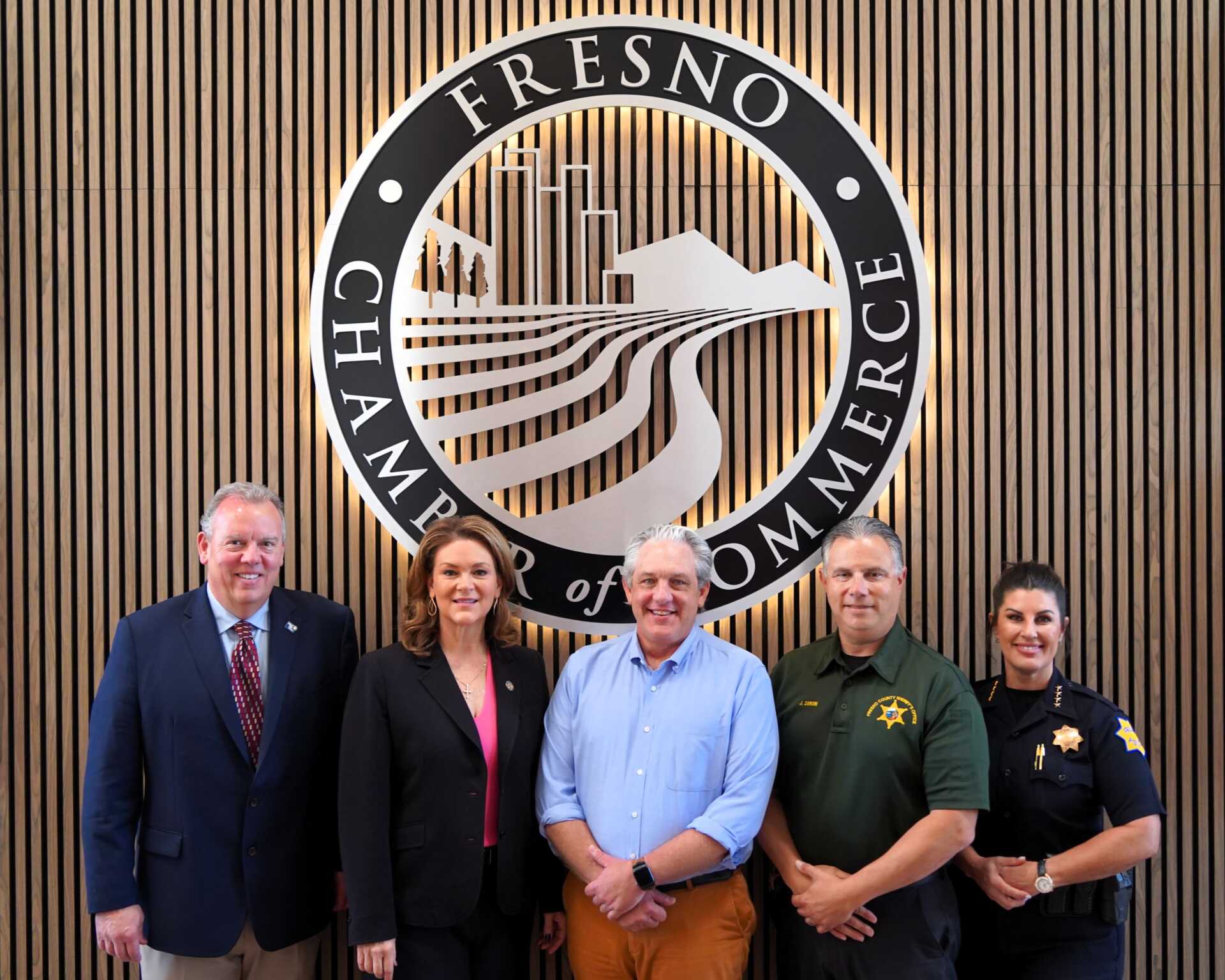
Californians Against Retail and Residential Theft (CARRT) convened a townhall forum today at the Fresno Chamber of Commerce, bringing together local business leaders, law enforcement, and the Fresno County District Attorney’s office to examine retail theft and the impacts of Proposition 36, just over 500 days after its implementation.
“We’ve seen some great progress with it,” said CARRT’s Matt Ross. “It’s showing some deterrence factor. More people know about the law and are fearful of being prosecuted.”
River Park spokesperson Tracy Kashian said that Prop 36 is working.
“It has changed the safety at our shopping center tremendously, by leaps and bounds,” she said.
Repeat offenders, who are so blatant as to be recognizable by retailers, are now being prosecuted thanks to Prop 36, according to Kashian.
“Our tenants were seeing the same people coming in,” she said. “Now, we are seeing less and less of that, which makes for a safer shopping experience.”
In review, Prop 36 introduces tougher penalties and greater accountability for repeat retail theft offenders. Instead of misdemeanors, some petty thefts—especially for repeat offenders—can now be felonies, and a third drug offense can yield an option of either a felony or drug treatment, a so-called “treatment-mandated felony,” which would give offenders a choice between behavioral health treatment or up to three years in jail or prison.
Fresno County District Attorney Lisa Smittcamp said that Prop 36 is a fix to Prop 47, which she said created “a perfect storm for disaster and chaos.”
Passed in 2014, Prop 47 reclassified certain non-violent, low-level property and drug offenses from felonies to misdemeanors, specifically for thefts under $950. It aimed to reduce prison overcrowding and reallocate state savings to mental health, education, and victim services.
Prop 47 took power away from law enforcement, Smittcamp said, encouraging thieves to repeatedly commit crimes without fear of retribution. There was nothing to stop people from filling carts and walking out the door, because they knew nothing would happen to them.
“Really, we were just spinning our wheels,” she said. “Cops were frustrated, business owners were frustrated, residents were frustrated.”
Prop 36 is one of the first steps back to some accountability for people, Smittcamp added, but it’s going to take a long time to reverse the damage of the last decade.
“We are now in a position where we can hold these repeat offenders accountable,” she said.
Smittcamp emphasized the treatment portion, saying it will help address homelessness. If offenders accept treatment, they enter a guilty or no contest plea and begin treatment; those who complete treatment have their charges dismissed. Individuals who fail to complete treatment may face up to three years in state prison.
“We’re hoping that people choose treatment over jail. That’s always the goal,” Smittcamp said.
Ross said that Proposition 36 represents a significant shift in the criminal justice system, restoring accountability for repeat offenders while expanding pathways to rehabilitation.
“It is to encourage folks to go into rehabilitation rather than going into incarceration,” he said. “That’s really why the law was written the way it is.”
Despite some success, Ross said Prop 36 is still a work in progress.
“We don’t have all the funding behind it to deal with all the rehabilitation programs that are needed,” Ross said, which is “encouraging people to become incarcerated rather than rehabilitated.”
“The disappointing part is that those individuals in Sacramento have not helped fund the implementation of Prop 36,” said Fresno County Sheriff John Zanoni. “The message to the people in our communities? Let your elected leaders know, ‘We voted for this, we want it funded, we want people held accountable.’”
Smittcamp said she hopes a changing of the guard at the state level will bring much needed funding to Prop 36.
“We’re hoping that with the advent of a new governor coming in that we’ll have some funding and we’ll have the state start to take some responsibility,” she said. “We talk about homelessness and we talk about the price of all the products we have to buy, but nobody focuses on the criminal aspects of this.”
Zanoni and Fresno Police Chief Mindy Casto stressed the importance of reporting retail theft crimes. Without reports from retailers, arrests cannot be made.
“Organized retail theft is down in the city,” Casto said. “Arrests are up.”
To date in 2026, there have been 152 arrests related to organized retail theft in the city of Fresno, Casto said. Last year, there were 225 arrests total, so Casto said her department should far surpass last year’s number.
County-wide, Zanoni said, there have been 1,422 bookings due to arrests for violations of laws that have been amended under Prop 36.
“That’s 1,422 individuals arrested for crimes that were not arrestable before,” he said. “The law has some teeth to it.”
Finally, community education and visibility are crucial, said Smittcamp.
“Keeping this topic at the forefront is very important,” she said. “The point of Prop 36 is to address this thing universally so that we get people into treatment, get them clean and sober, get them productive, get them back in school, get them back to work, get them off drugs and get them back to being productive members of society.”
For more updates on Fresno County development and business initiatives, stay connected with the Fresno Chamber of Commerce.