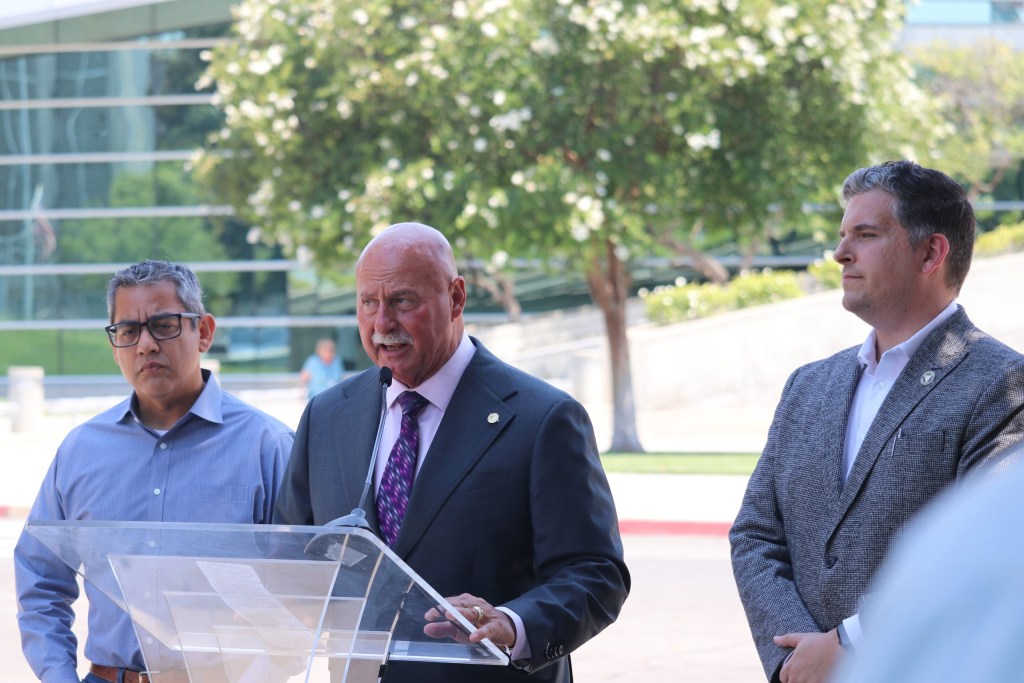
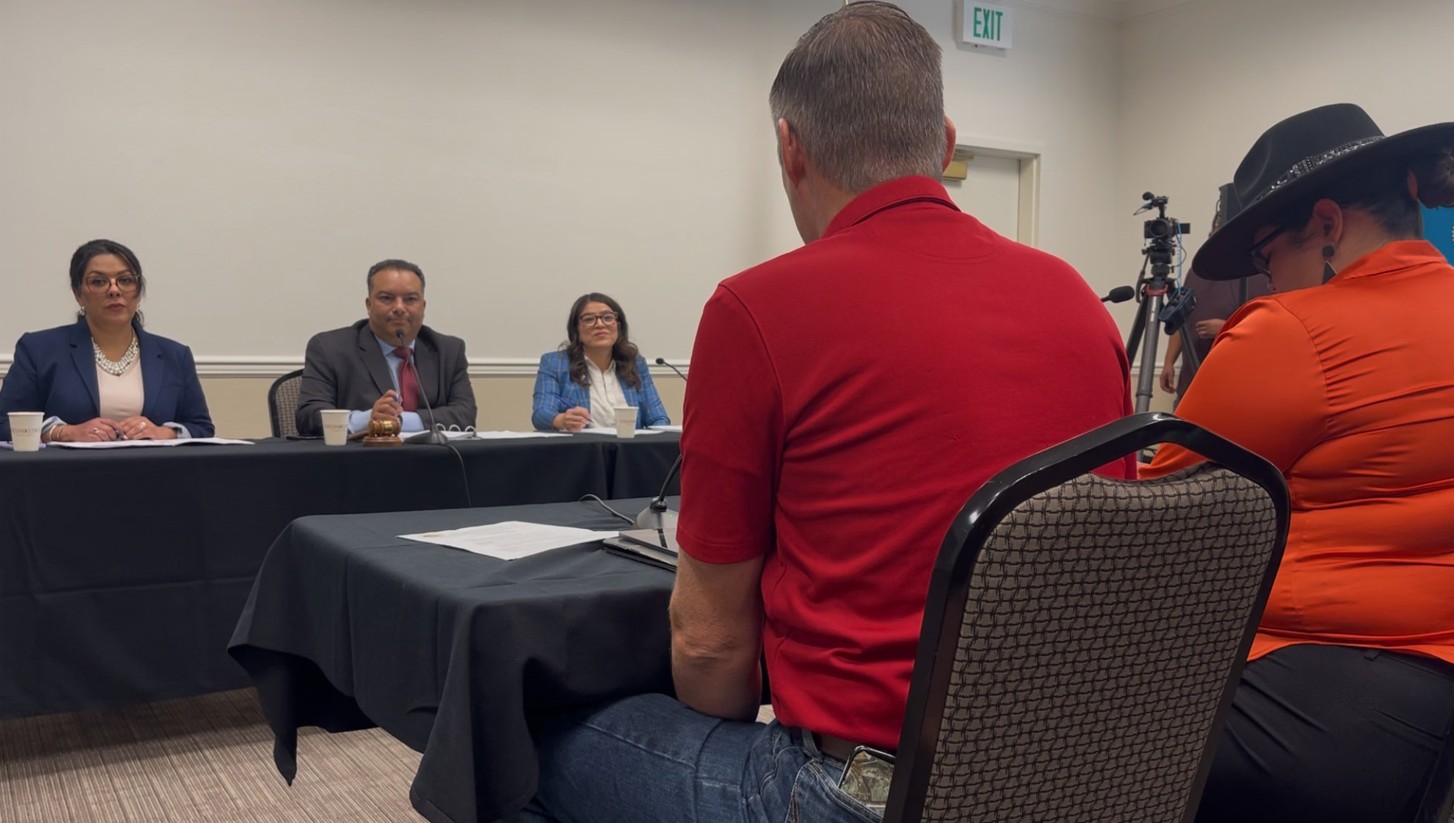
Assemblymembers Esmeralda Soria and José Luis Solache Jr. hosted a joint hearing Friday, Oct. 24, at Fresno State to explore the economic pressures squeezing Central Valley farmers and families.
“We are here to listen, to understand, and to put together practical solutions so that when we go back to Sacramento in January, we are able to work together hand in hand with many of you to try to tackle the challenges that many of our communities are facing related to increasing labor expenses, inflation, water scarcity, regulation, and then market fluctuations, which sometimes we can’t control much,” Soria said.
Soria, a Democrat representing District 27, is the chair of the Assembly Agriculture Committee and a member of the Assembly Committee on Economic Development, Growth, and Household Impact. Solache, a Democrat representing District 62, chairs the latter committee.
Panelist Dr. Srinivasa Konduru, chair of Fresno State’s Department of Agricultural Business, explained the vast economic importance of agriculture in the Central Valley. He noted that farming provided 41,500 jobs, or 9.5% of total jobs, in Fresno County in 2024. The county’s agricultural gross production value in 2023 was $8.59 billion, he reported.
Agriculture faces numerous barriers to growth, Konduru said, including water shortages and groundwater management regulations; labor issues including rising costs and immigration policies; uncertainties in international markets; invasive pests; and increasing production costs.
The conversation moved from farming challenges to the broader cost-of-living impacts for local families. Caroline Danielson, vice president of research and senior fellow at the Public Policy Institute of California, noted that from July 2019 to July 2025, food prices rose about 30% in the U.S., compared to about 5% from July 2013 to July 2019.
“Pressure due to rising food costs can also mean cutting back on other expenditures for families to afford food,” she said.
Ryan Jacobsen, farmer and CEO of the Fresno County Farm Bureau, said that consumers may believe that farmers are flourishing as grocery prices rise, but they aren’t.
“In almost every case, our commodities have remained the same or went down in price, and yet what you’re paying as a consumer has went up, and that’s going to other segments of the value chain,” he said. “The transportation, refrigeration, processing, packaging, marketing, sales, the store, etc. has increased all those areas. But we truly are market takers, not price setters when it comes to what’s going on with the supermarkets right now. I think that’s the biggest key to take away from today is not to tie those two together.”
The joint hearing at the Smittcamp Alumni House was part of the California Pocketbook Tour presented by the Committee on Economic Development, Growth, and Household Impact highlighting cost-of-living challenges. Solache said the tour aims to ensure that the voices of all Californians are heard.
“This tour is not just about Southern California. It’s not just about the Bay Area. It’s about everyone that matters, from the bottom to the top and in between,” he said. “That was the priority of this Pocketbook Tour – to ensure those voices were amplified throughout the state.”
For more updates on Fresno County development and business initiatives, stay connected with the Fresno Chamber of Commerce.