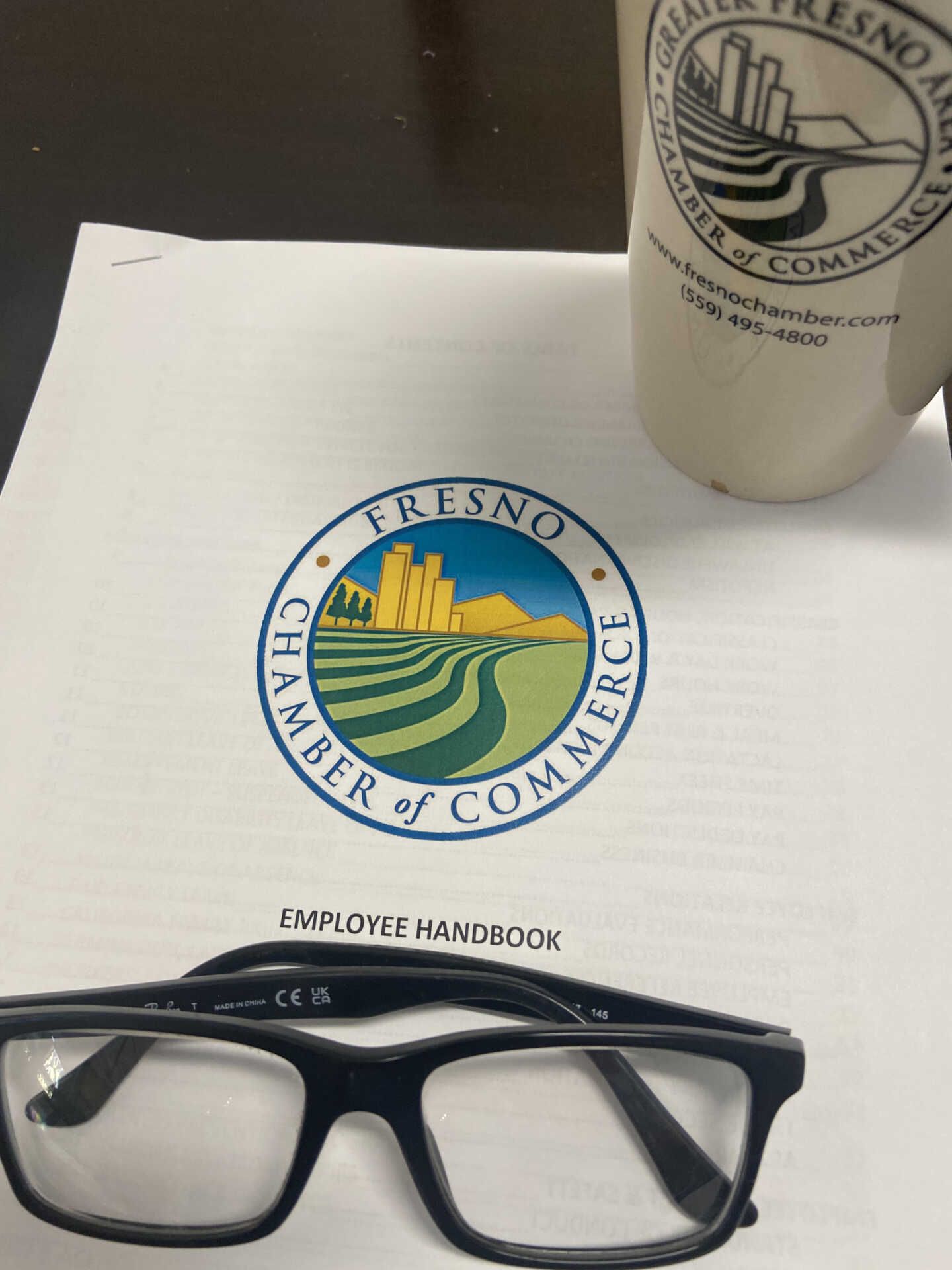
A new or refreshed employee handbook can strengthen and protect your business in 2026
We’re already a month into 2026, which means if you haven’t done so already, the time is now to update and refresh your company’s employee handbook to reflect new labor laws.
“It’s time to put into practice the new rules,” said Matthew Roberts, Associate General Counsel for Labor and Employment at the California Chamber of Commerce, speaking on an episode of “The Workplace,” a podcast by CalChamber.
A well-crafted employee handbook, while not required by California law, has a number of benefits to the employer, including demonstrating legal compliance, serving as a resource manual, supporting better performance by employees, and strengthening defense against legal claims, according to CalChamber Employment Law Counsel Vanessa Greene.
“If I were running a business in California,” Greene said, “I would not be doing it without a handbook.”
Roberts and Greene said there are some basic policy requirements that employers must have in writing, such as a harassment, discrimination, and retaliation policy, along with a lactation accommodation policy. Employers should also have family medical leave written policies if they have others in place that address personal or disability leave.
New laws for 2026 begin with leave of absence changes, said Greene. It’s something that usually needs to be updated annually in employee handbooks, and this year is no exception. Permissible use to California paid sick leave, for example, was expanded to include crime victims’ leave, jury duty leave, and witness duty.
Greene encouraged employers to refresh employee handbooks for those permissible use additions.
“You should really look at updating those sections for consistency,” she said.
Not every new law is going to create a handbook policy, especially when it comes to things like mandated notices. Greene said there is a new required notice in California called the Workplace Know Your Rights Act notice, which informs workers of their rights regarding safety, pay, union organizing, and protections against retaliation and immigration-related workplace issues, including instructions for designating an emergency contact.
California employers have until February 1, 2026, to distribute the new Workplace Know Your Rights Act notice to all current employees and all newly hired employees in California, and they must reissue the notice every year thereafter.
The law imposes significant penalties on employers that fail to provide the notice or that retaliate against employees who exercise rights under the statute.
“That’s something that should be provided as a standalone document to employees,” Greene said. “We want to keep the handbook really focused on our workplace policies and handle those legal required notices separately.”
One thing employers should consider adding to employee handbooks in 2026 is a policy on technology in the workplace, said Greene. Smart glasses and artificial intelligence tools are becoming mainstream whether we want them to or not, and employers need to consider how such tools are going to impact workplace safety, privacy and productivity.
Greene also discussed longer-term policies that may have “drifted out-of-synch” with how employers operate. Policies on performance management and discipline, remote work, and meal/rest break waivers may all need to be updated to ensure current practices actually match what the policy says.
It may sound elementary, but “reading what our policy says is step number one when we’re thinking about how to address issues in the workplace,” said Greene.
Rolling out a new or audited handbook should not be taken for granted. Simply passing the handbook around for an acknowledgement signature isn’t proactive enough to drive compliance. Greene suggests having a short meeting and sending a memo to clearly call out what has changed and what employees are expected to do differently.
“It’s important to really make sure employees understand what’s in the handbook,” Greene said.
Highlighting top priorities and emphasizing supervisor training are also key. If supervisors haven’t read the handbook or aren’t applying rules consistently, that can create a liability in the workplace.
“We really want to make sure our supervisors are trained before rolling out our new handbooks,” Greene said.
Bottom line: In 2026, an employee handbook works best when it’s not just legally compliant, but easy to understand, regularly updated, and actually used. When done right, it reduces risk, supports managers, and helps your business operate more smoothly and confidently.
For more updates on Fresno County development and business initiatives, stay connected with the Fresno Chamber of Commerce.